District Spotlight
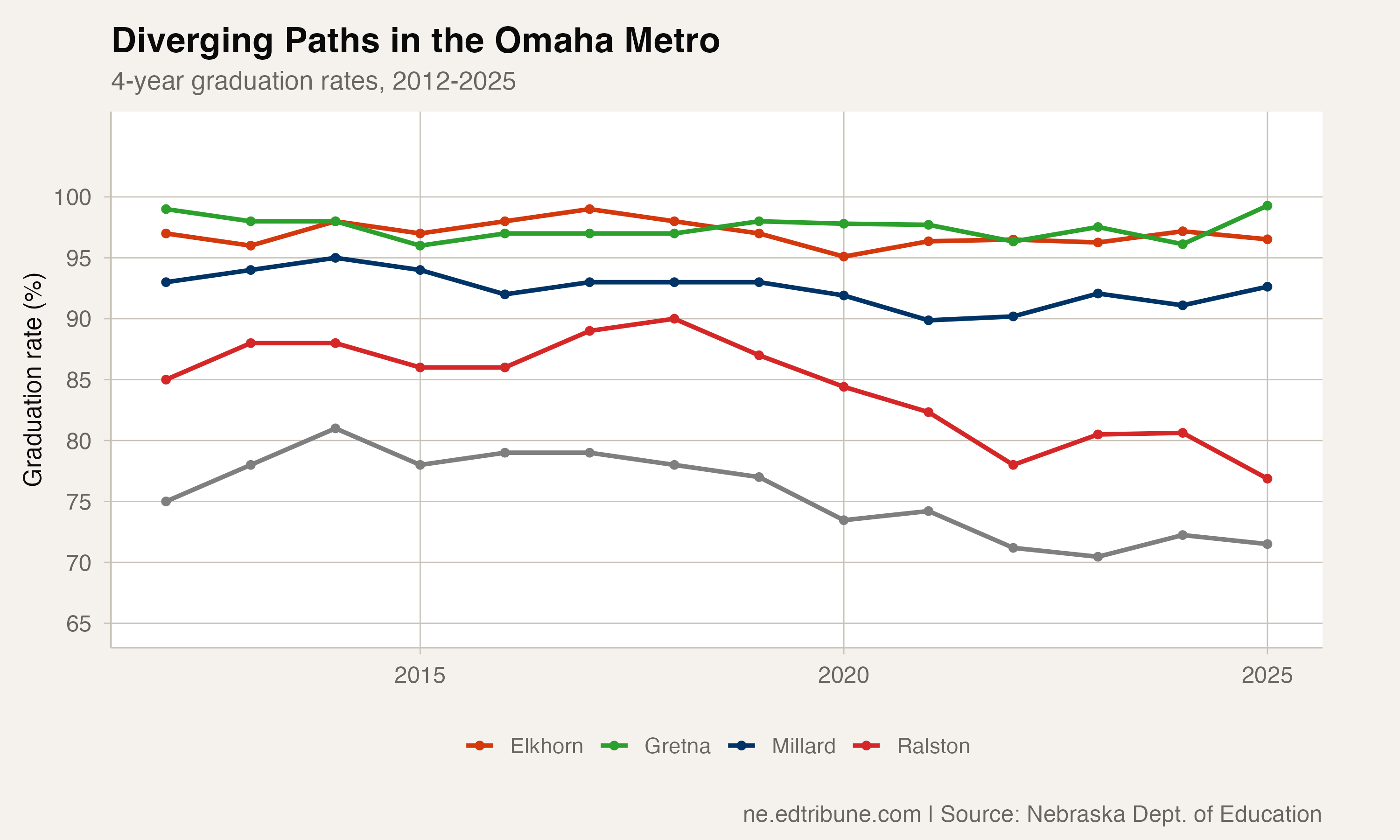
Ralston's Quiet Collapse: From 90% to 77% Inside the Omaha Ring
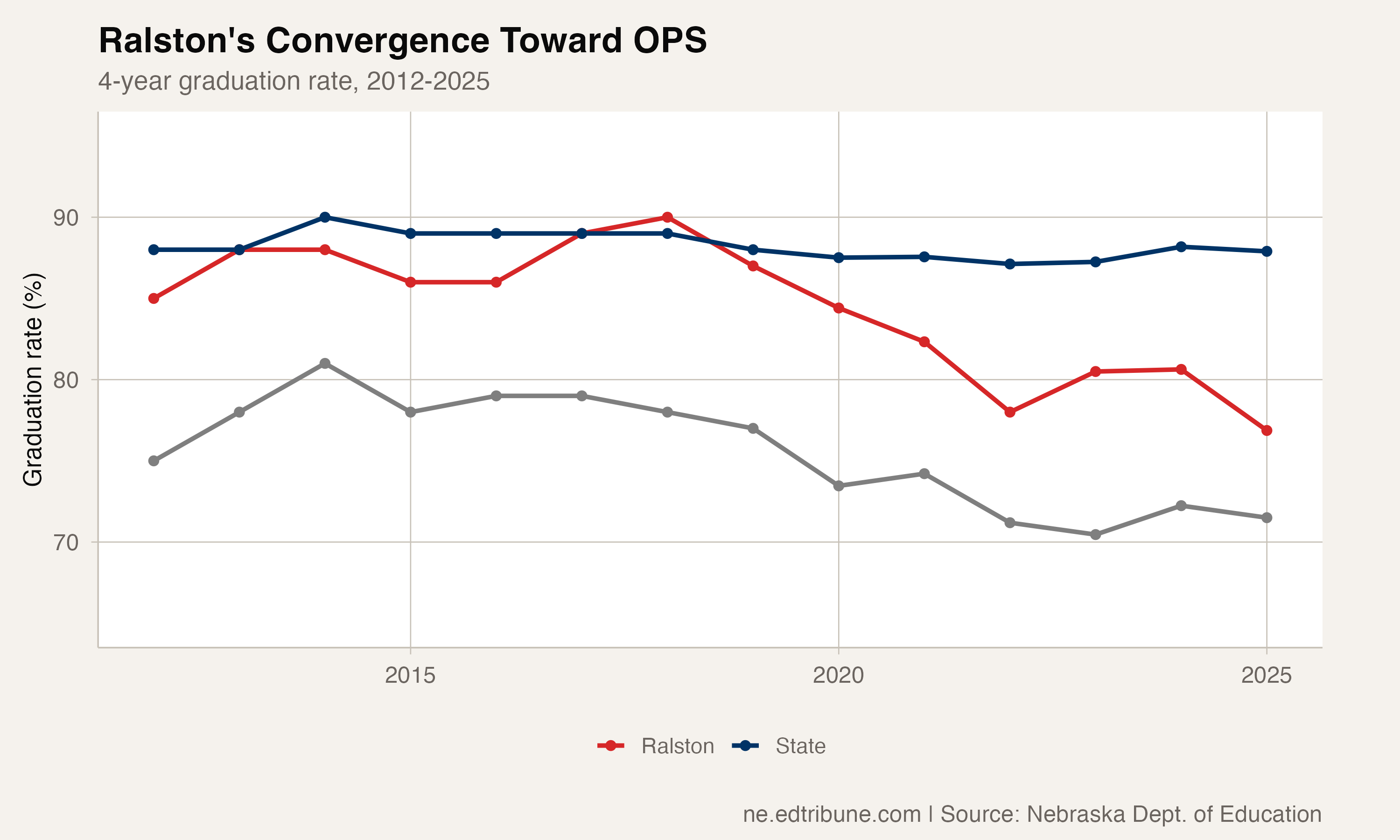
Ralston Public Schools has declined from 90% to 76.9% over seven years. The enclave inside Omaha now sits closer to OPS than to the state average.
Data-Driven Education Journalism for the Cornhusker State
Education News & Data
Local education reporting from every corner of Nebraska, grounded in Nebraska Department of Education data.
Gretna graduated 414 of 417 students on time in 2025, ranking first among 11 Nebraska districts with cohorts of at least 400 students.
Nebraska had 128 district graduation rows at 95% or higher in 2025, but those districts represented 28.2% of the students in the usable district-row cohort.
The OPS male graduation rate has been below 70% for six consecutive years. The 2025 gender gap was 10.3 points, 2.4 times the state average, and 664 OPS males did not finish on time.
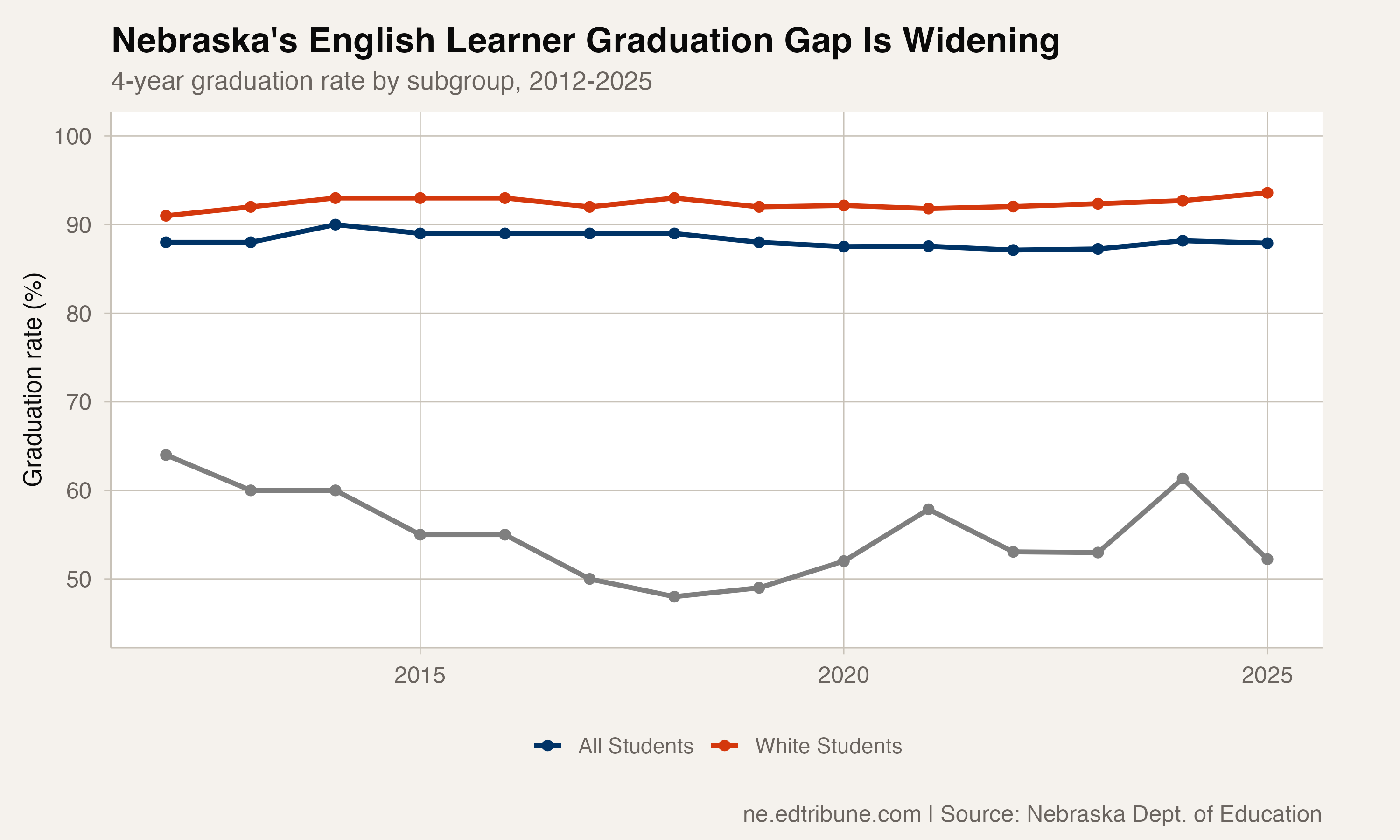
Foster care youth graduate at 55%, English learners at 52%, students who are currently homeless at 62%. Nebraska's most vulnerable populations form a graduation floor 26 to 36 points below the state average.
Ralston Public Schools has declined from 90% to 76.9% over seven years. The enclave inside Omaha now sits closer to OPS than to the state average.
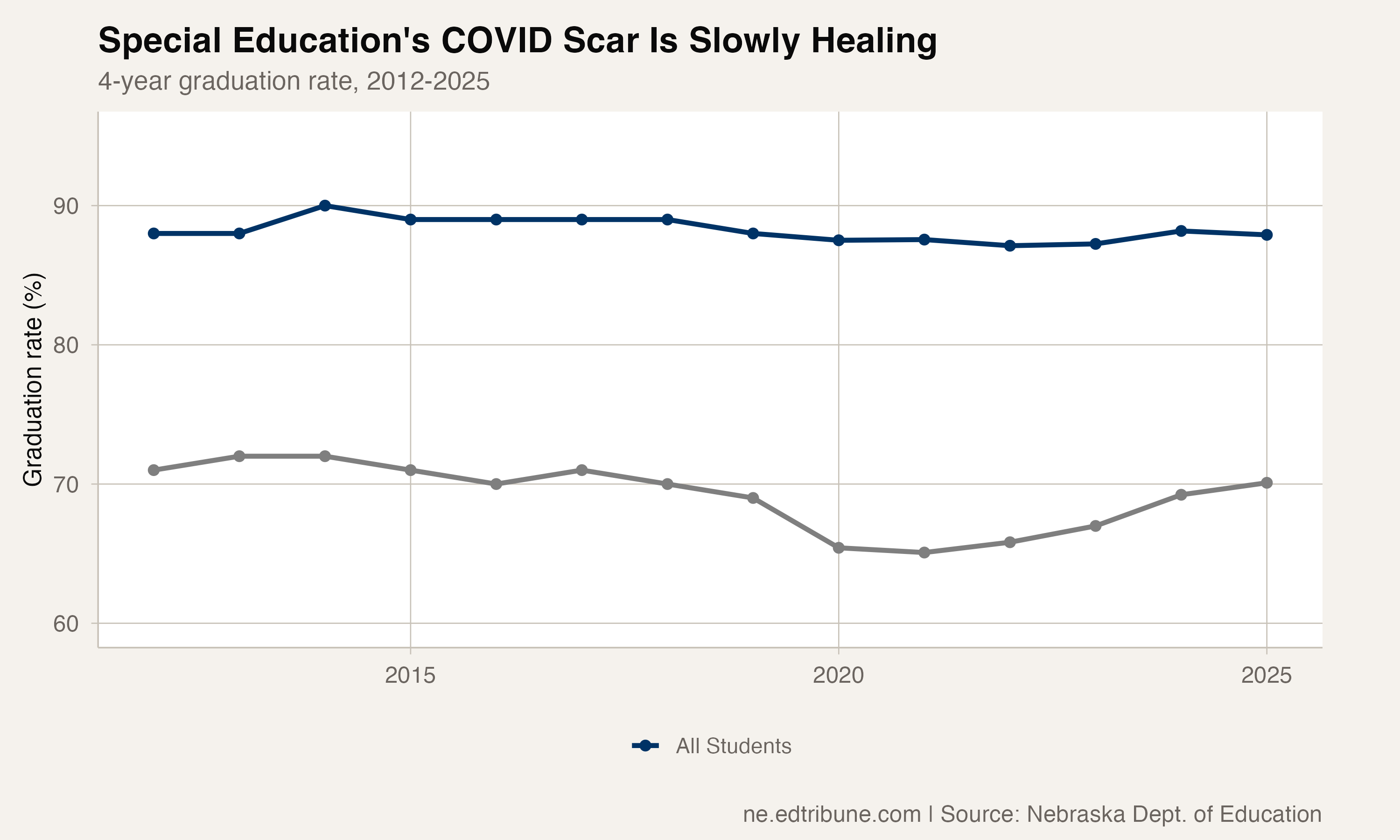
Nebraska's special education graduation rate dropped nearly 4 points during COVID, widening the gap to 22.5 points. Five years later, the rate has barely returned to pre-pandemic levels.
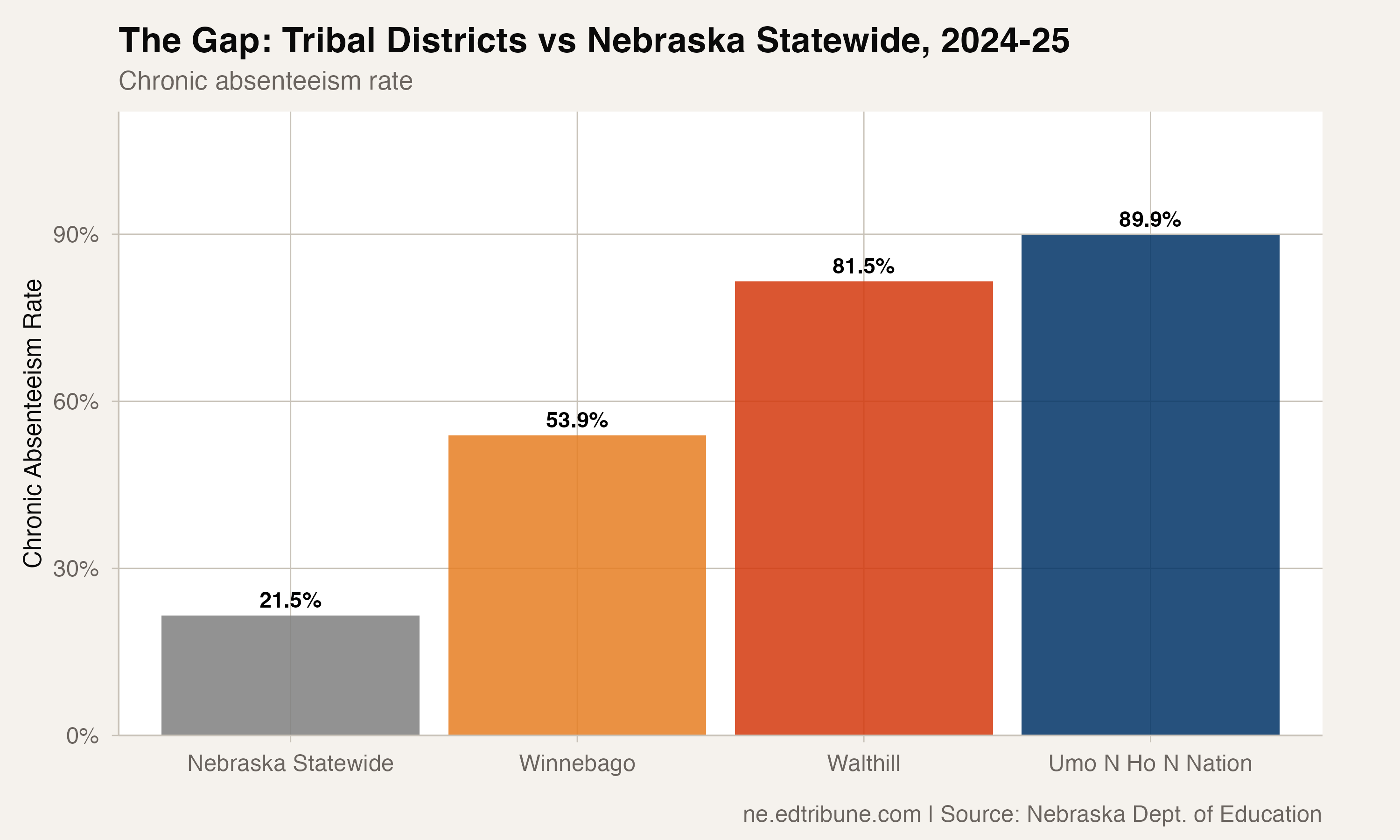
Three Nebraska school districts on the Omaha and Winnebago reservations have chronic absenteeism rates from 54% to 90% -- the highest in the state by a wide margin.
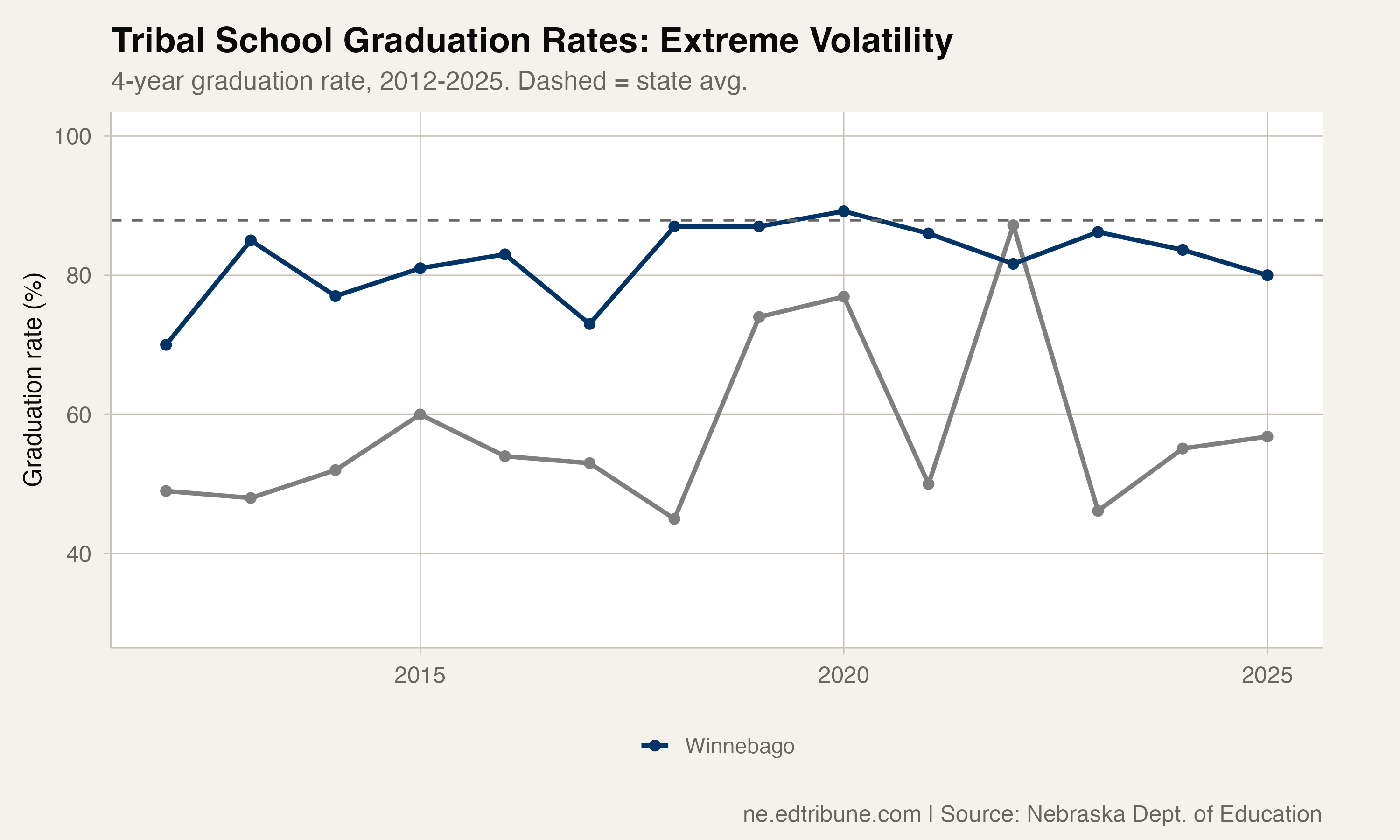
Umo N Ho N Nation Public Schools graduated about 57% of its 2025 cohort, the state's lowest, after years near the middle. Winnebago held at 80%. The statewide Native American rate trails white students by about 20 points.
Gretna graduates 99.3% of its seniors. Omaha Public Schools, just across a municipal line, graduates 71.5%. The 27.8-point gap maps onto the most visible divide in Nebraska education.
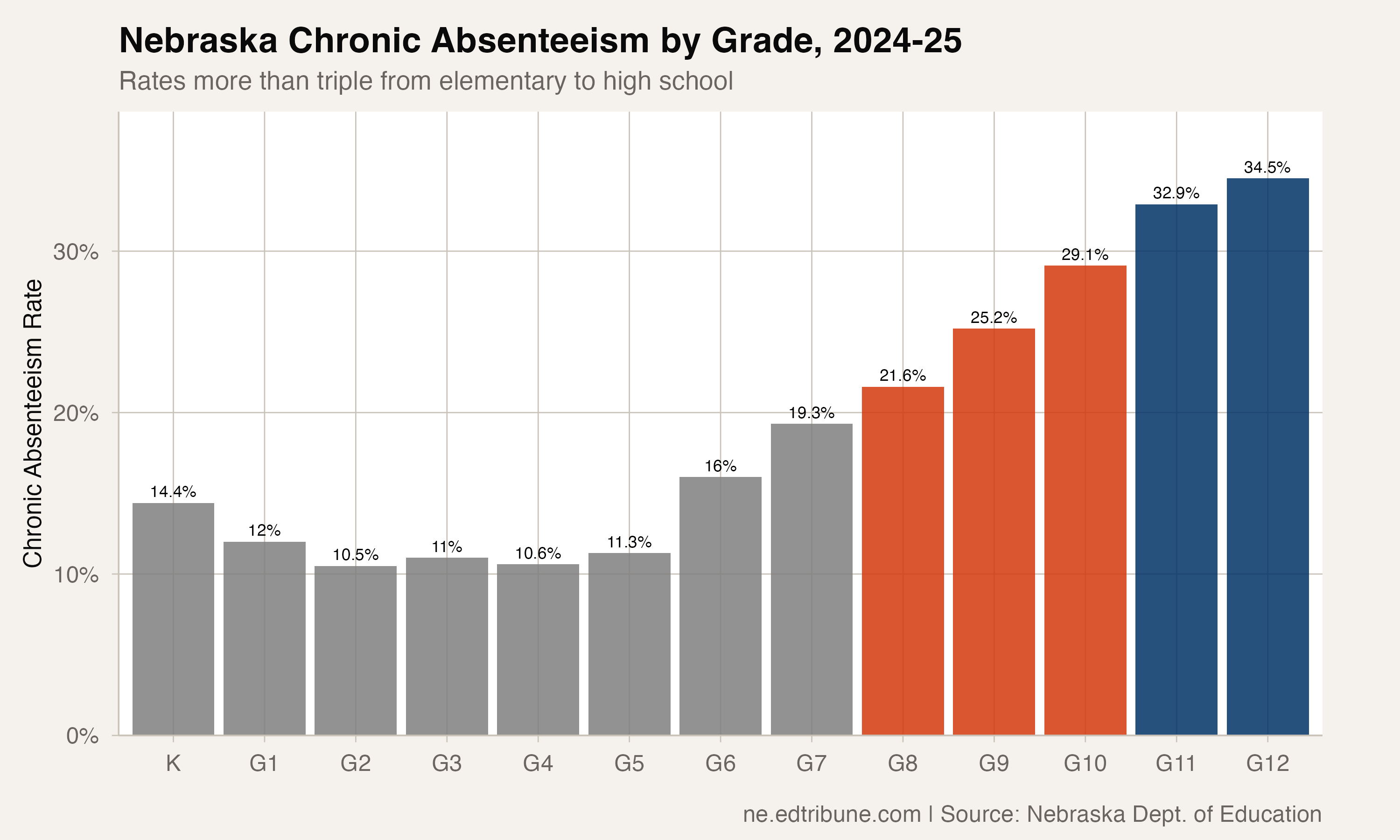
Nebraska's 12th-grade chronic absenteeism rate was 37.2% in 2024-25, more than double the kindergarten rate and nearly triple the third-grade rate.
Nebraska's English learner graduation rate has fallen from 64% to 52% over 14 years while the overall rate barely moved. The 41-point gap to white students is the state's widest equity chasm.
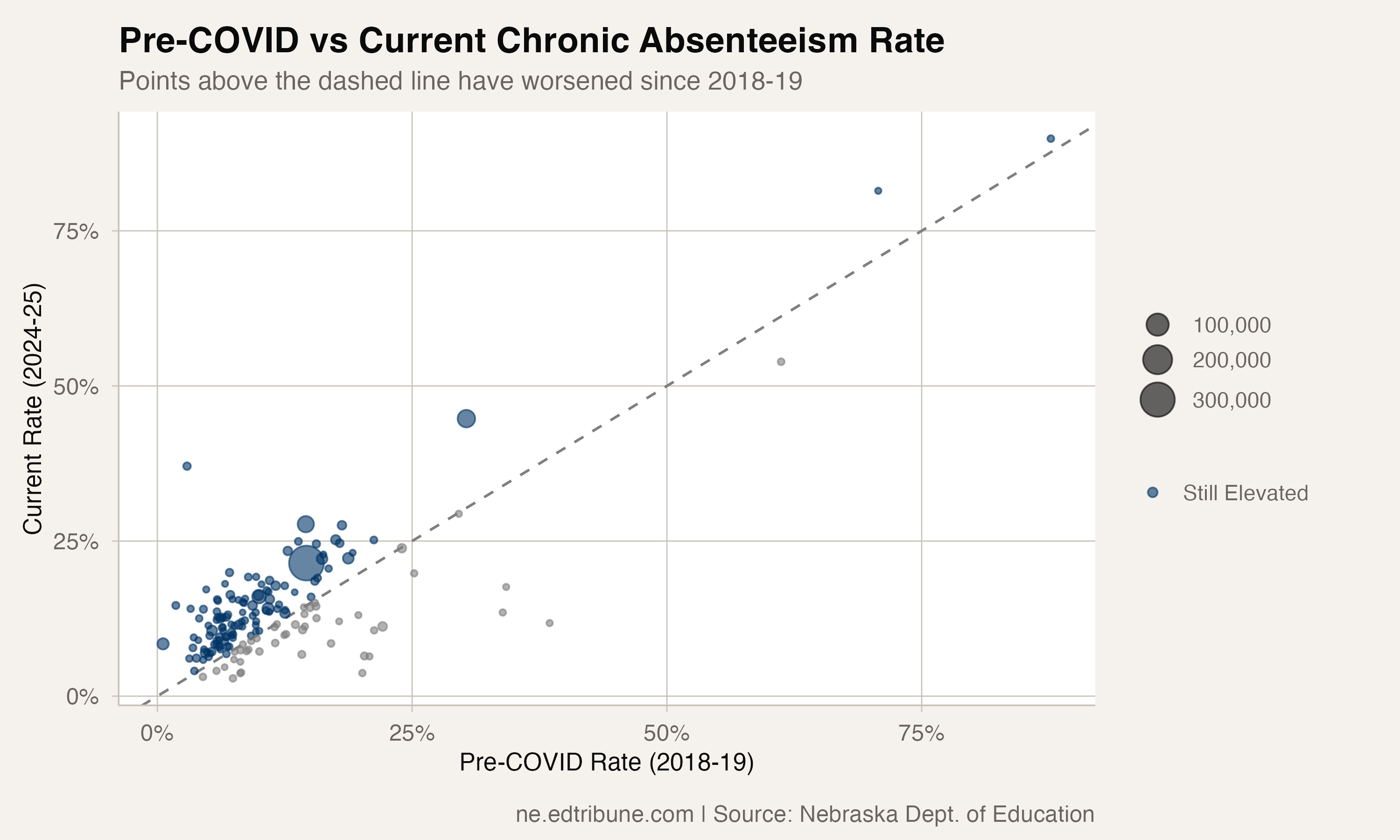
Nearly three in four Nebraska districts still have higher chronic absenteeism than before COVID -- and not a single large district has recovered.
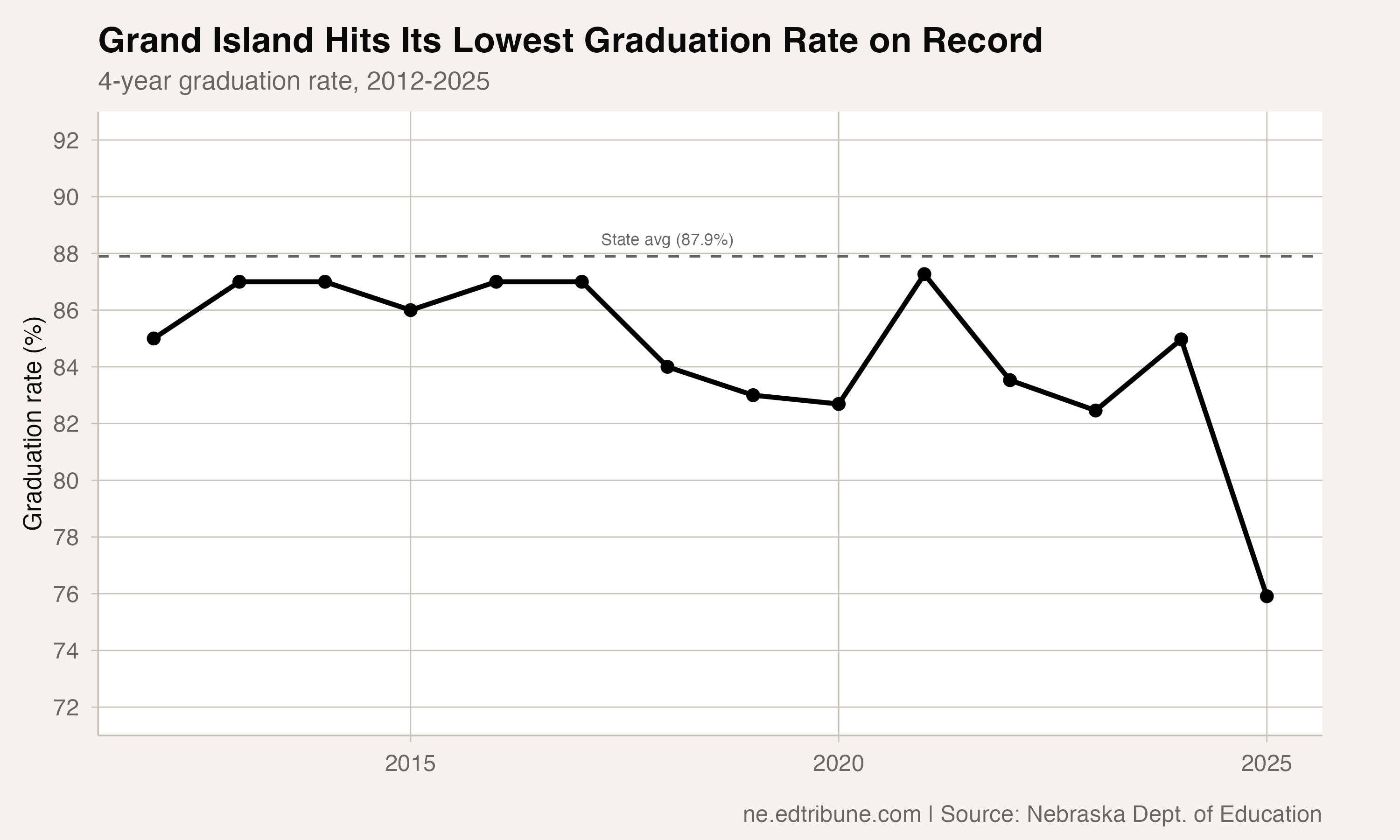
Grand Island Public Schools posted a 75.9% graduation rate in 2025, its worst on record. The district says an ELL enrollment policy change created a one-time bubble, but the underlying trend was already declining.
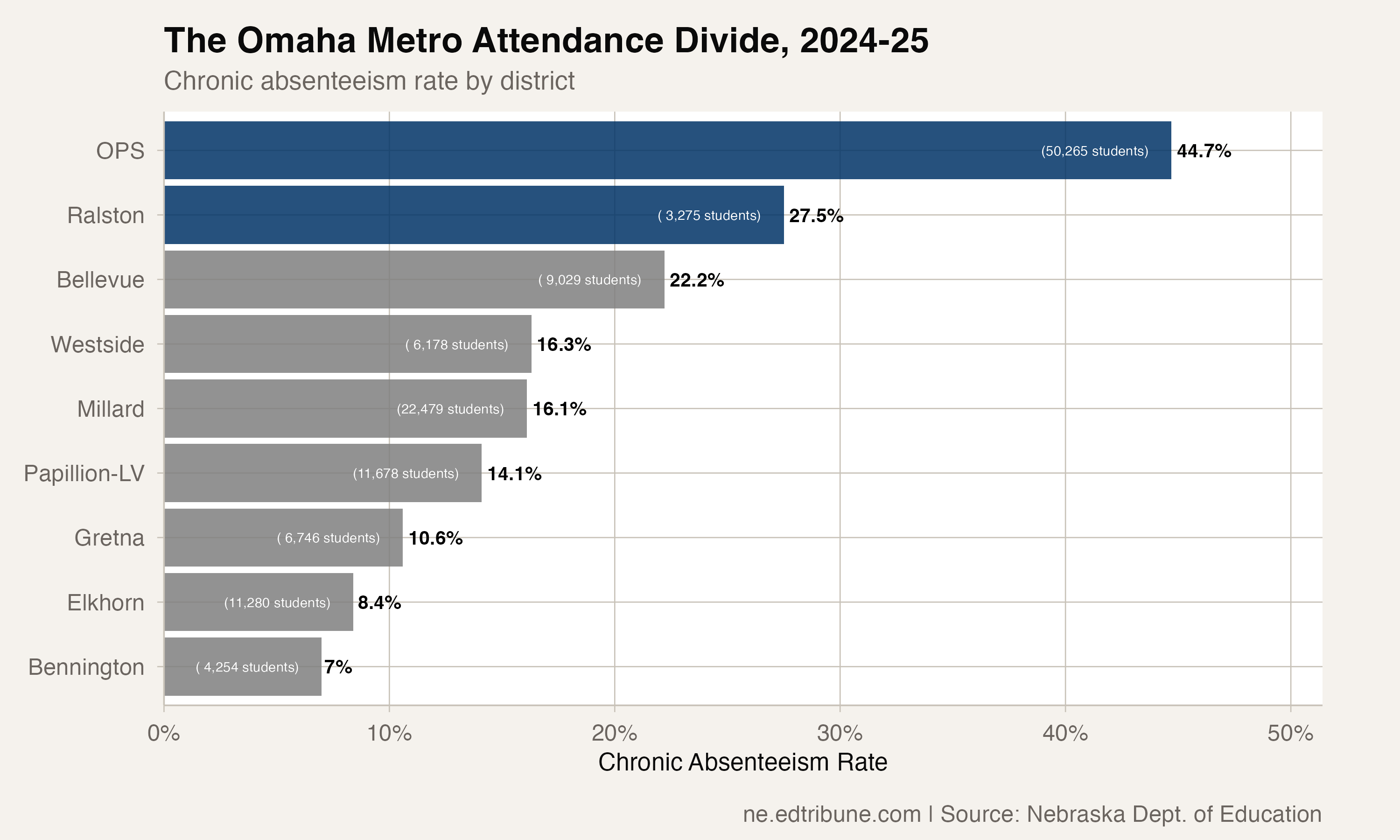
Nine Omaha-area school districts, separated by minutes on the highway, produce chronic absenteeism rates ranging from 7% to 45% -- a 38-point chasm.
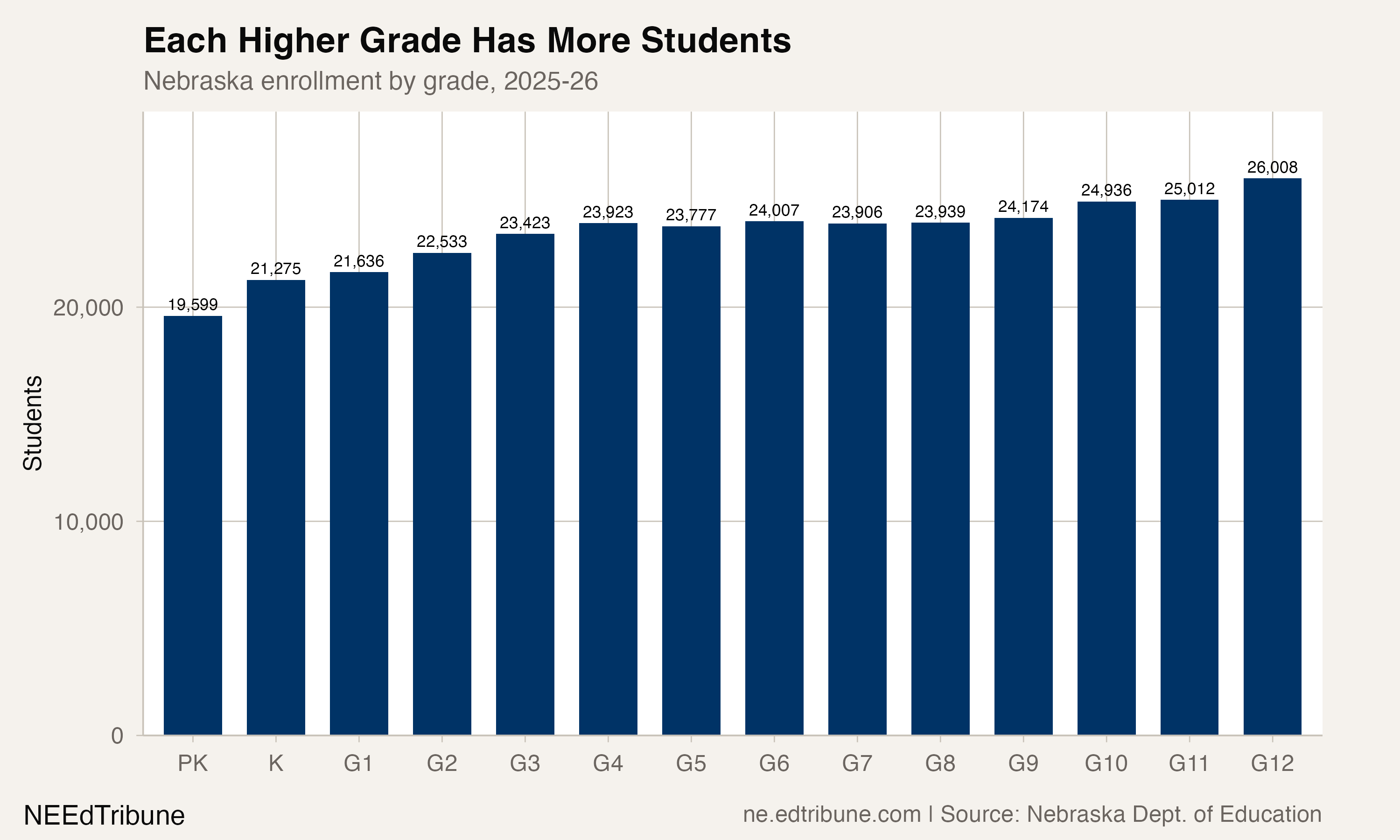
Grade 12 hit an all-time high of 26,008 in 2025-26 while kindergarten dropped to 21,275, near its early-2000s trough, widening a gap that signals a shrinking enrollment pipeline.