Nearly Half of Omaha Public Schools Students Are Chronically Absent
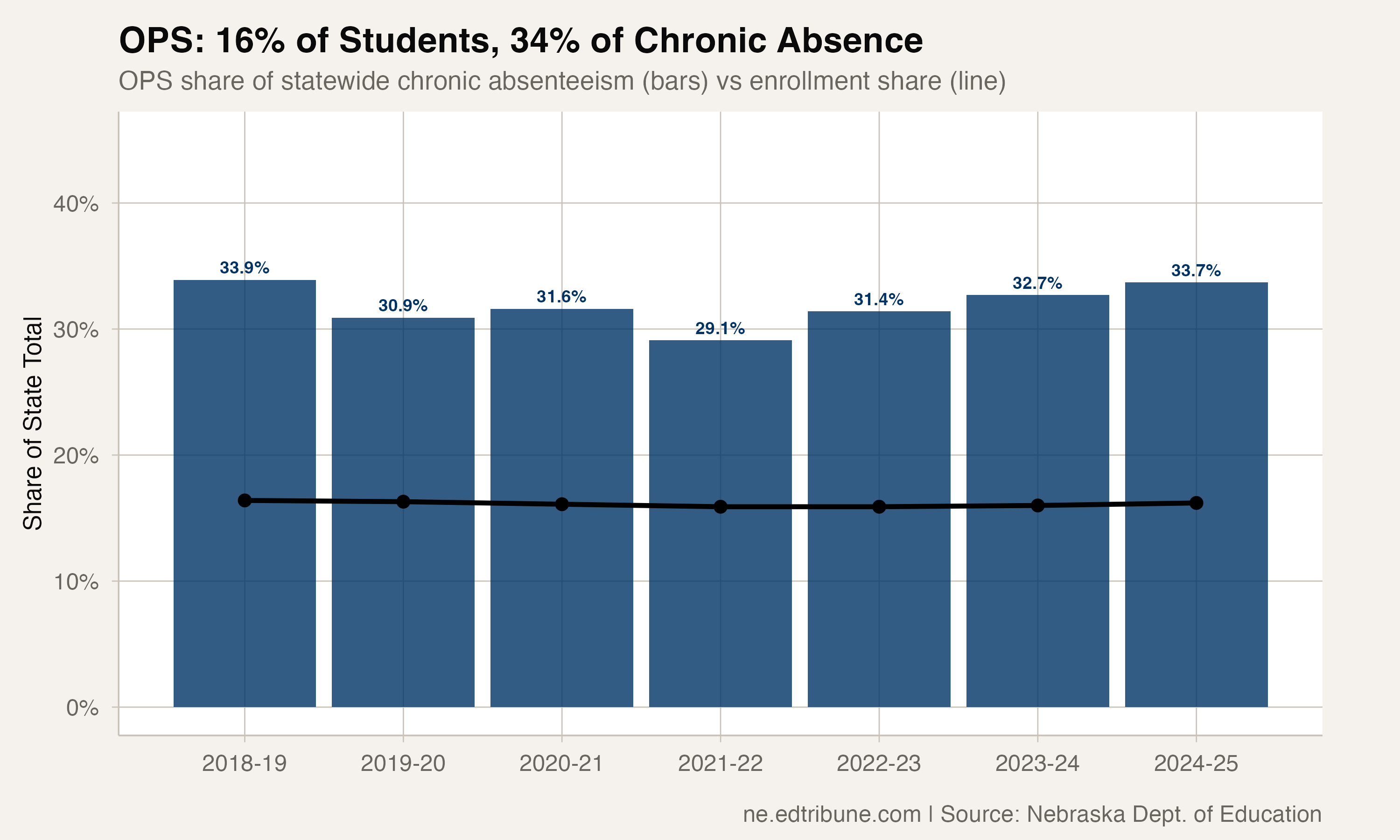
Omaha Public Schools' chronic absenteeism rate has plateaued near 45%, with nearly one in five OPS high schoolers missing more than a quarter of the school year.
Data-Driven Education Journalism for the Cornhusker State
Page 2 of 3
Omaha Public Schools' chronic absenteeism rate has plateaued near 45%, with nearly one in five OPS high schoolers missing more than a quarter of the school year.
Bennington, Gretna, and Elkhorn are the only Nebraska districts to post enrollment gains in all 21 year-over-year transitions since 2005.
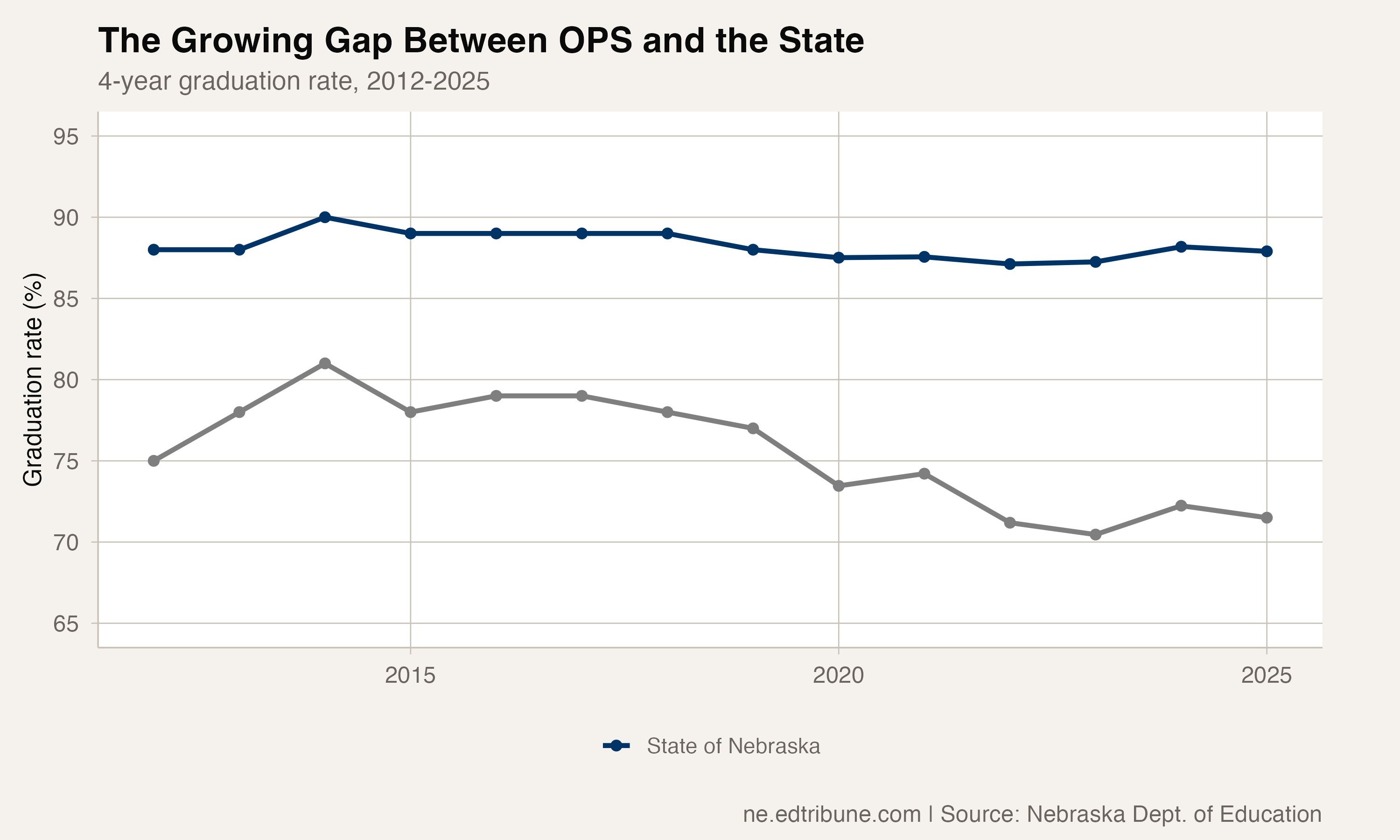
Omaha Public Schools graduated 71.5% of its 2025 cohort — a 16.4-point gap to the state average, the widest on record. Inside the district, 1,085 students didn't finish on time.
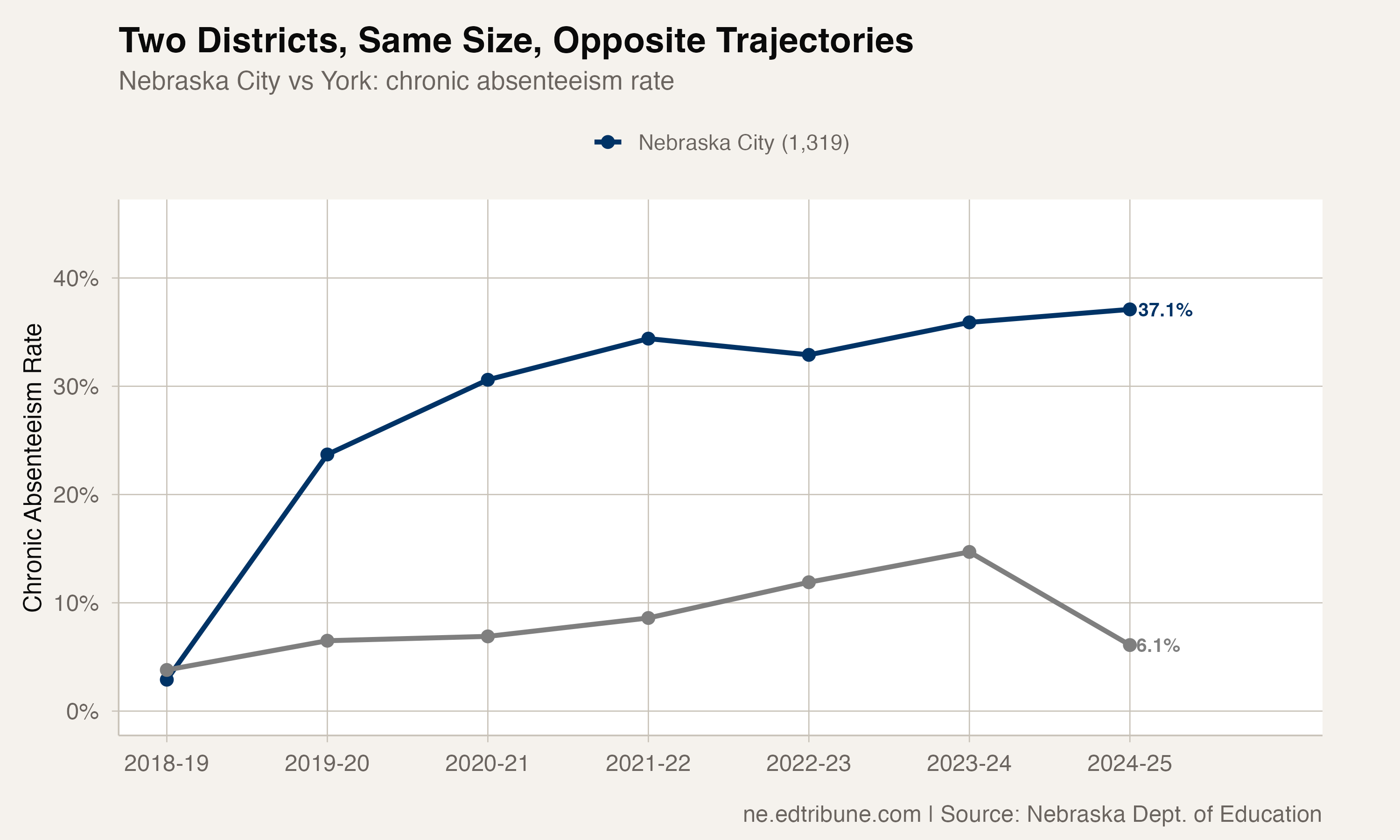
Nebraska City had a chronic absenteeism rate of 2.9% before COVID. Six years later, it's 37.1% -- a 34-point increase that dwarfs every other district in the state.
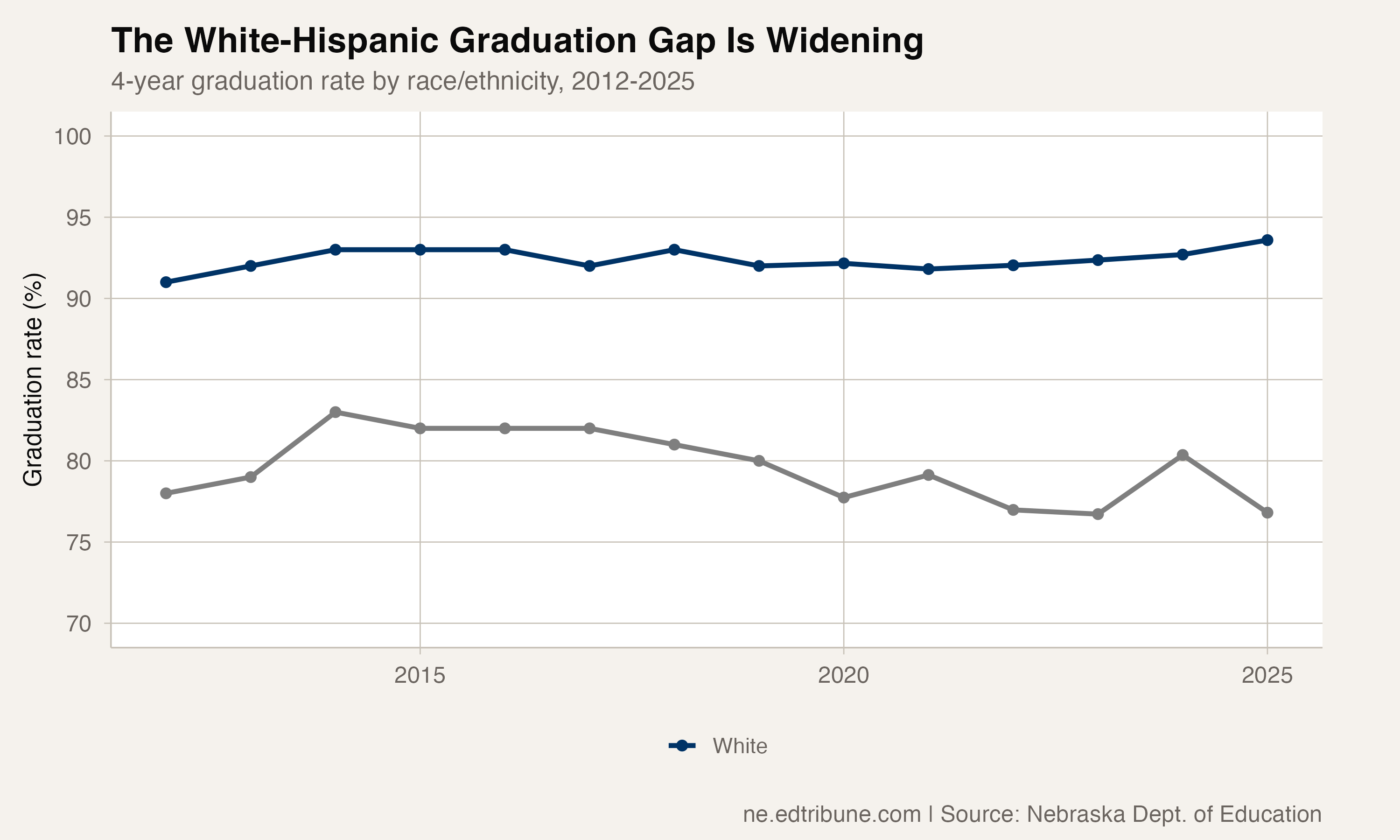
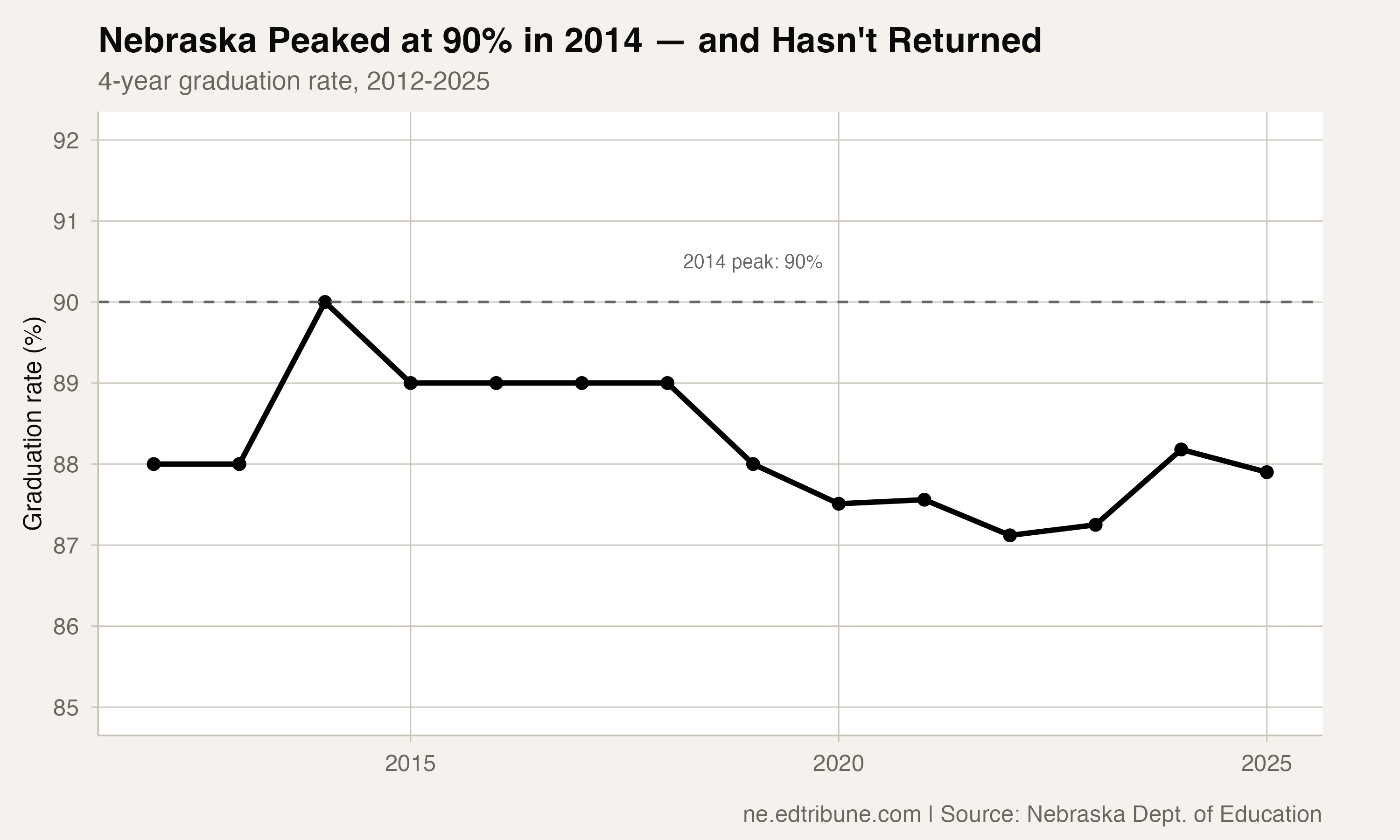
Nebraska hit a 90% graduation rate in 2014 and has not returned. The rate looks stable at 88%, but a growing cohort means 760 more students per year don't finish on time.
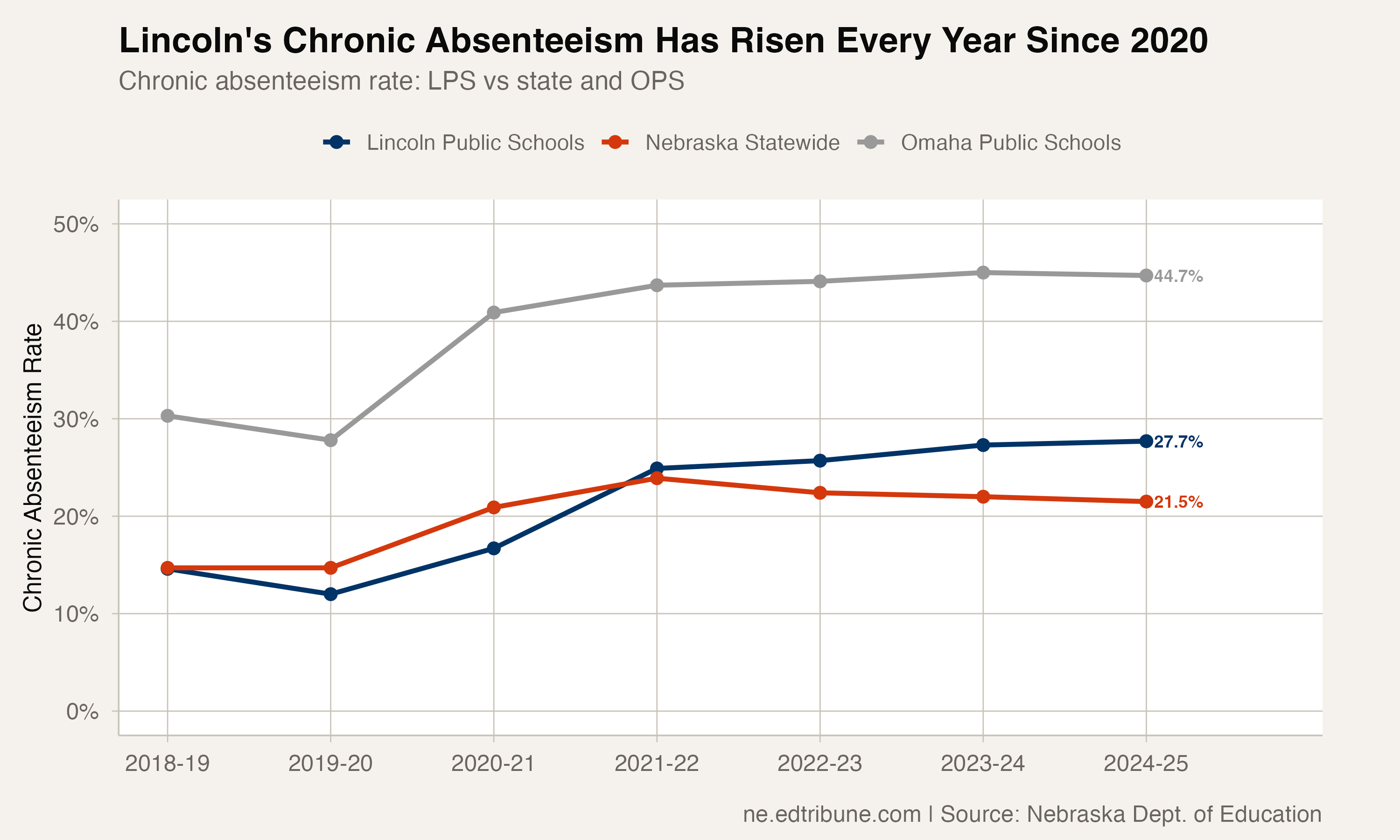
Lincoln Public Schools is the only major Nebraska district where chronic absenteeism has worsened every year since 2020 -- bucking the statewide recovery trend.
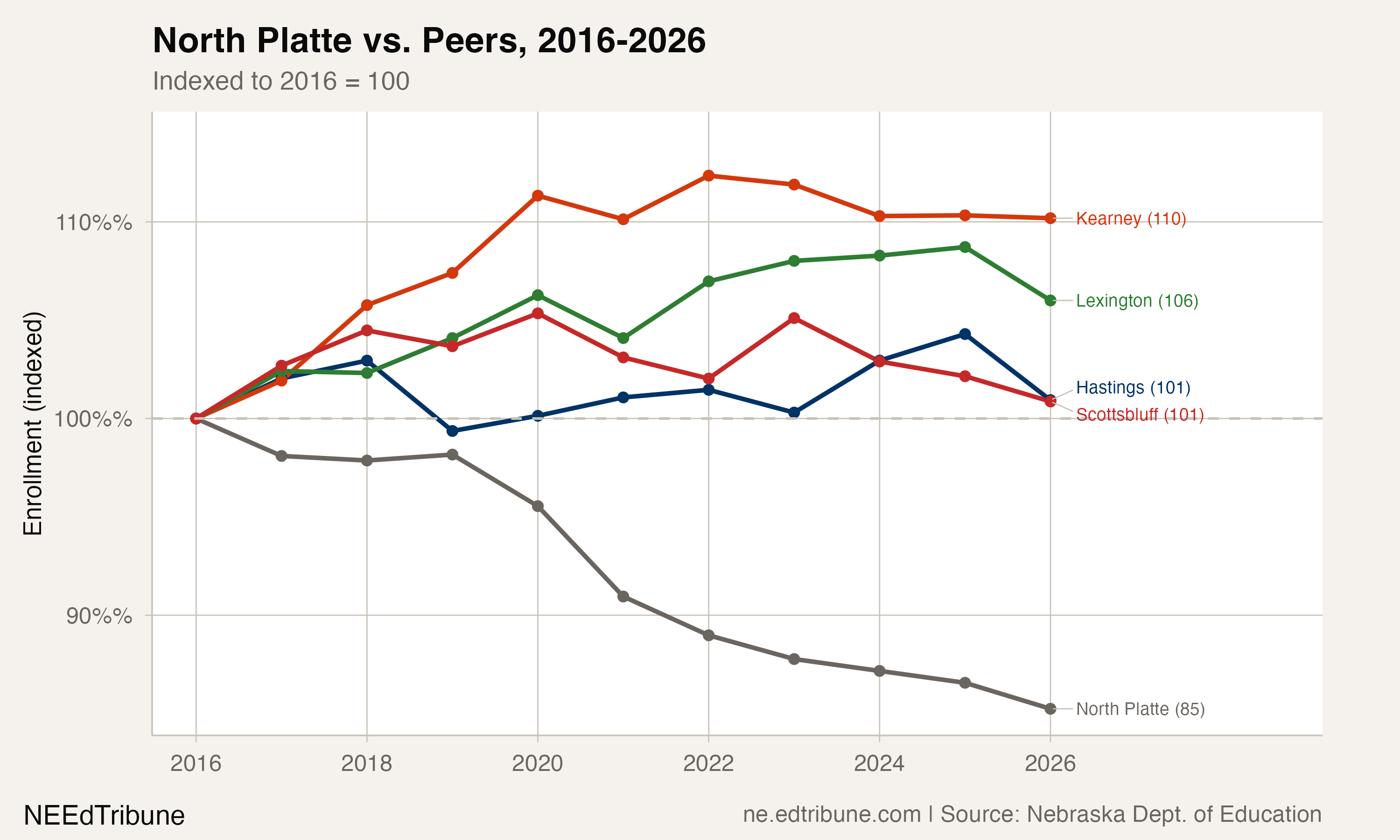
North Platte Public Schools has the longest decline streak among Nebraska's mid-size districts, losing 14.8% of enrollment since 2016 even as the state grew.
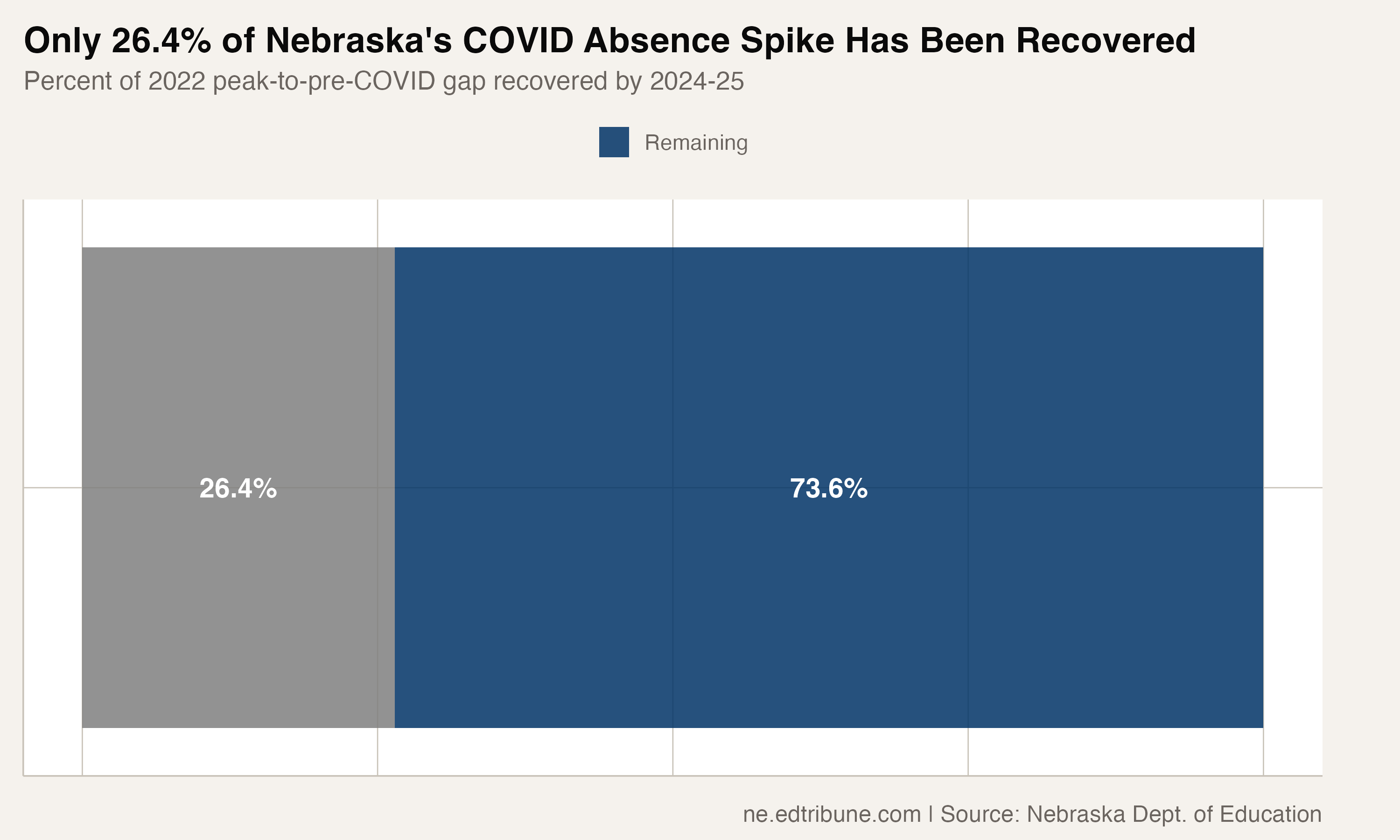
Nebraska's chronic absenteeism rate has fallen only 2.4 percentage points from its 2022 peak, with 21,515 more students chronically absent than before COVID.
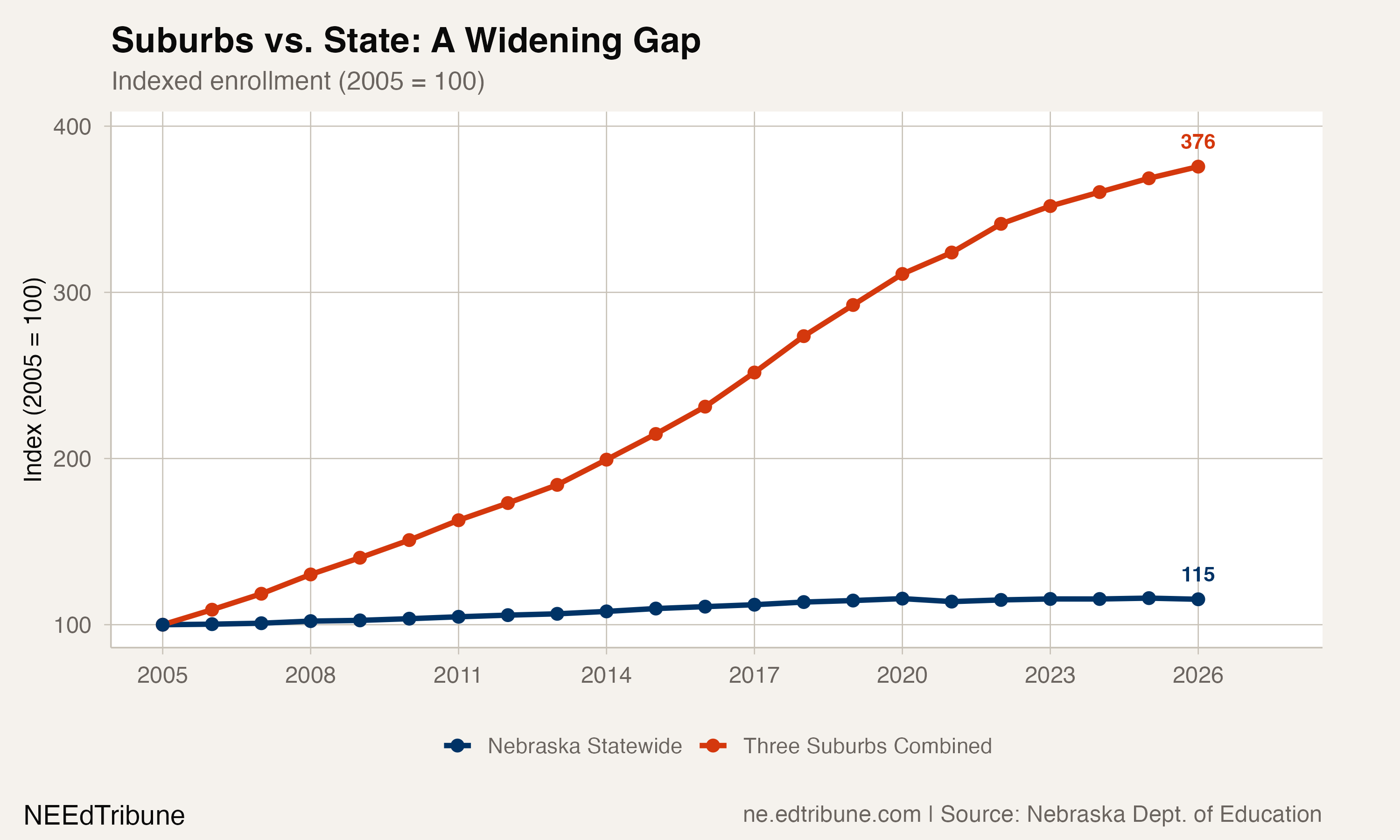
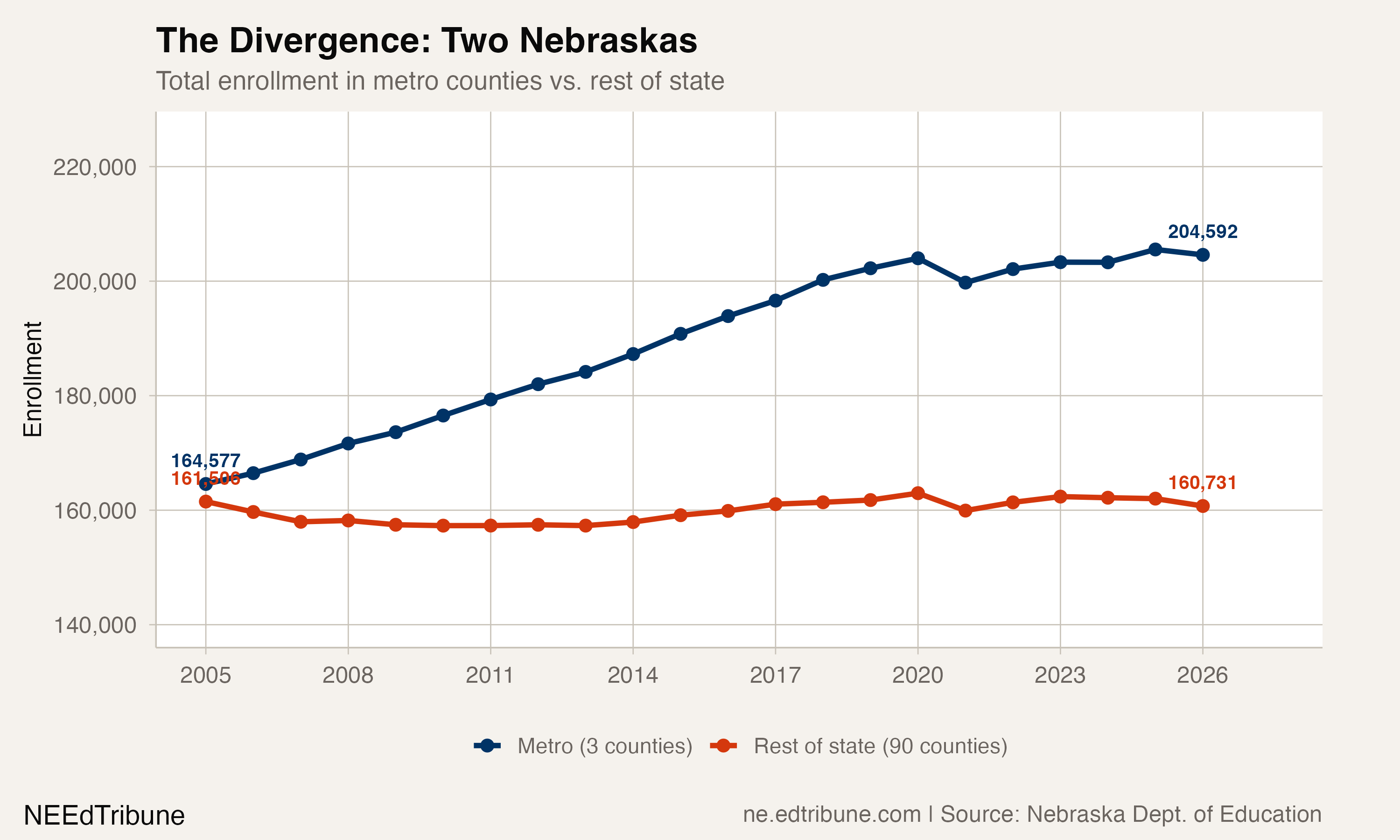
Douglas, Sarpy, and Lancaster counties added 41,573 students since 2005 while the rest of Nebraska added just 1,976, a 6.2-point enrollment shift.
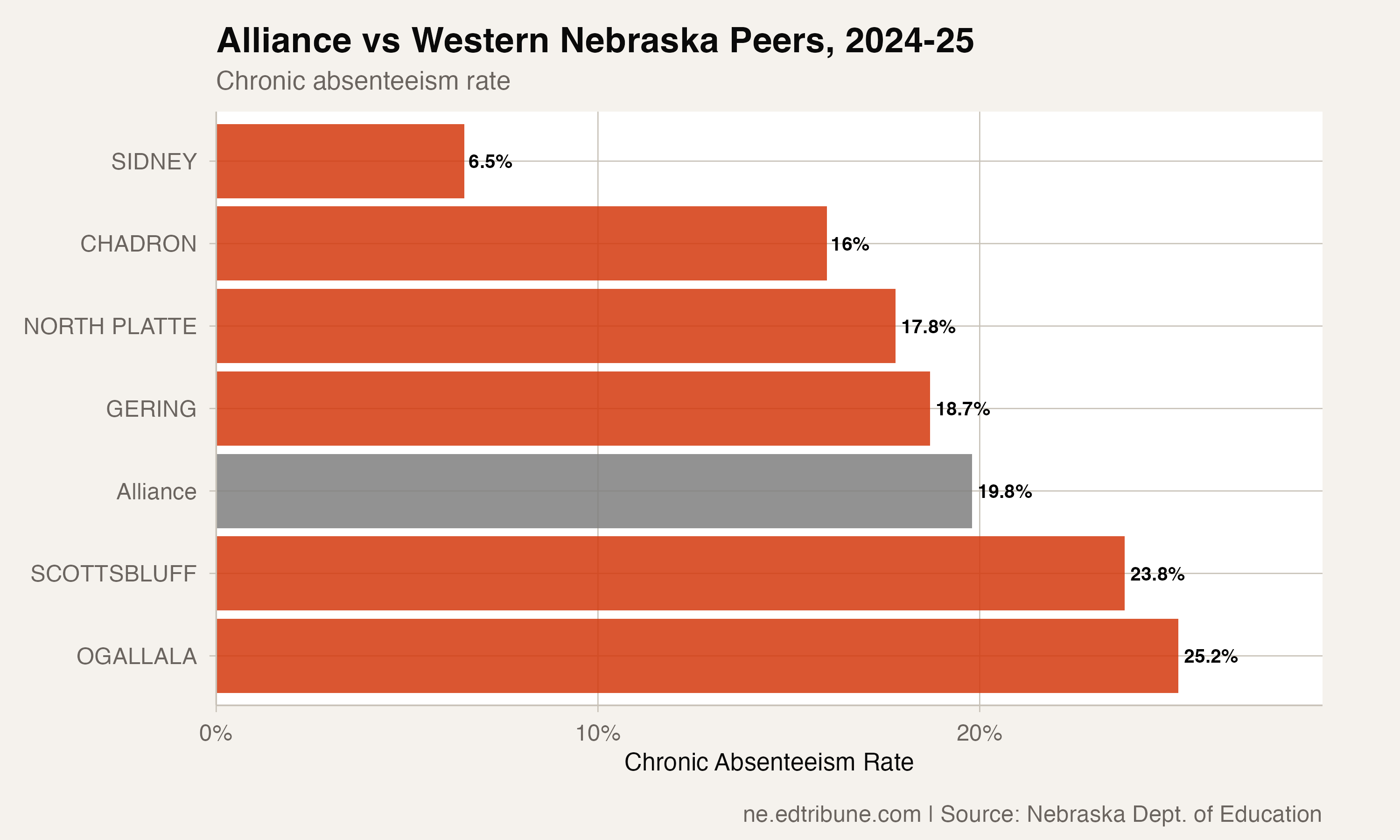
Alliance Public Schools achieved Nebraska's largest chronic absenteeism improvement: a 28.5 percentage-point drop over four consecutive years.
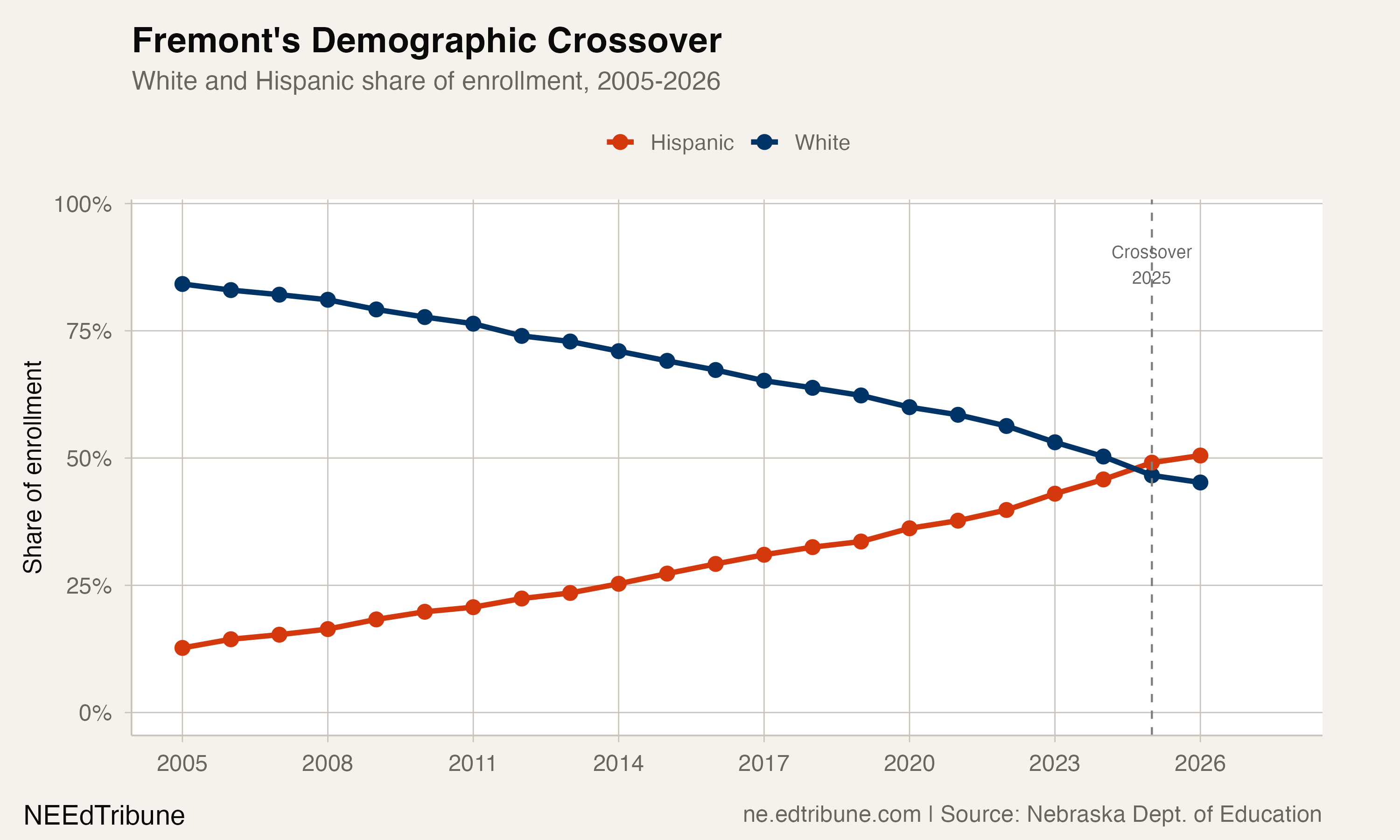
Fremont voted to ban undocumented renters in 2010. Its schools are now 50.5% Hispanic and 45.2% white. The crossover happened in 2025.
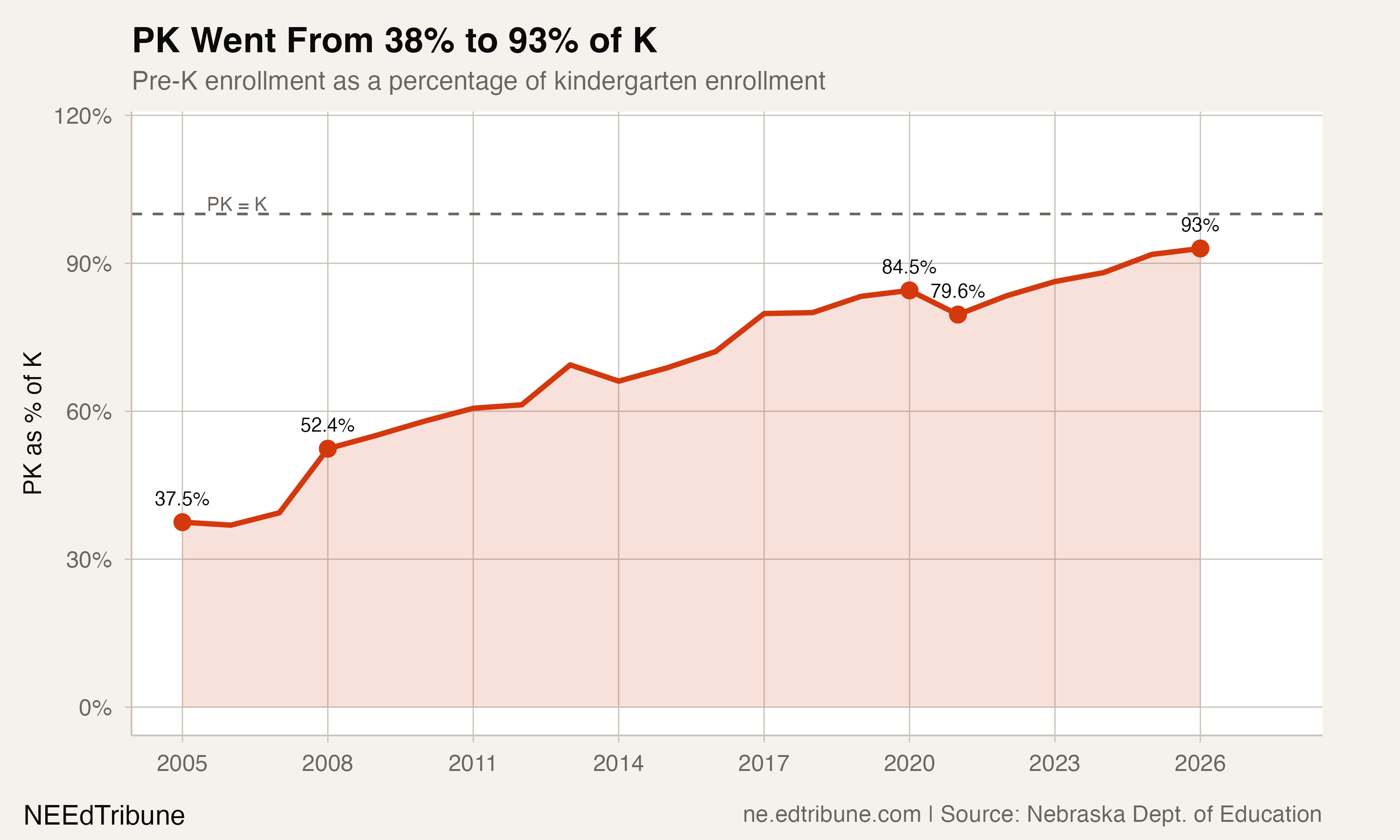
Pre-K enrollment more than tripled since 2005, now reaching 92% of kindergarten. Nearly one in three new students Nebraska gained came from expanding pre-K.
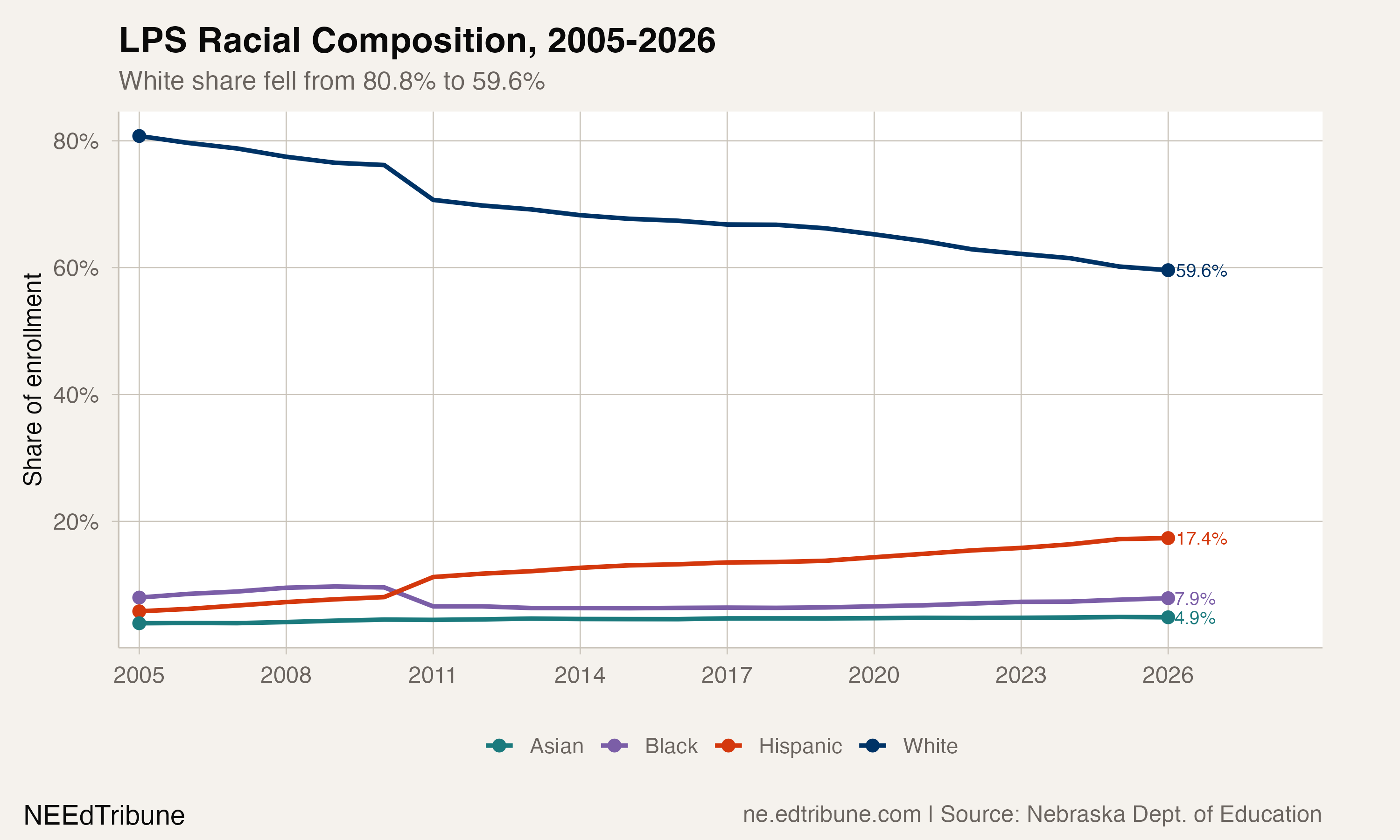
After 15 straight growth years adding 10,000 students, LPS lost 334 in 2026. Shrinking K classes and white enrollment decline drive the reversal.
Nebraska's meatpacking corridor has transformed: Grand Island crossed majority-Hispanic in 2013, Schuyler hit 88%, and second-wave towns are following.
Nebraska grew enrollment during COVID and recovered fully by 2025. But 2026 brought the first post-recovery decline, and more than half of districts never came back.